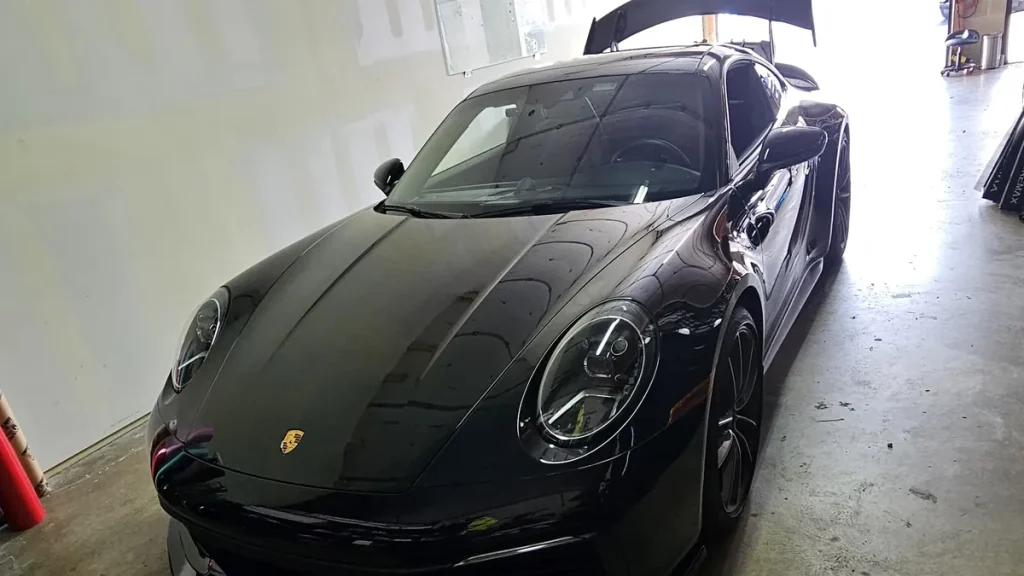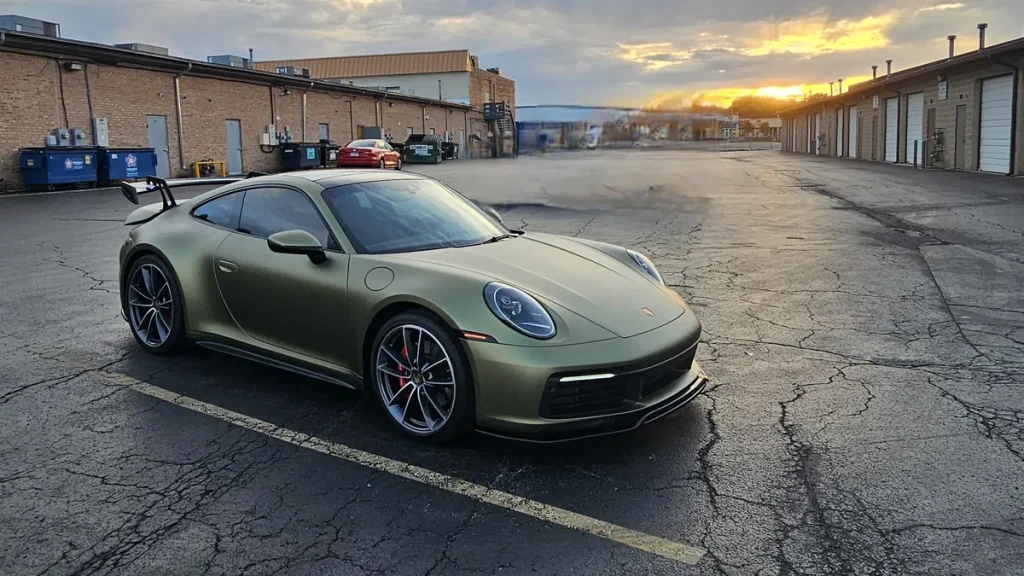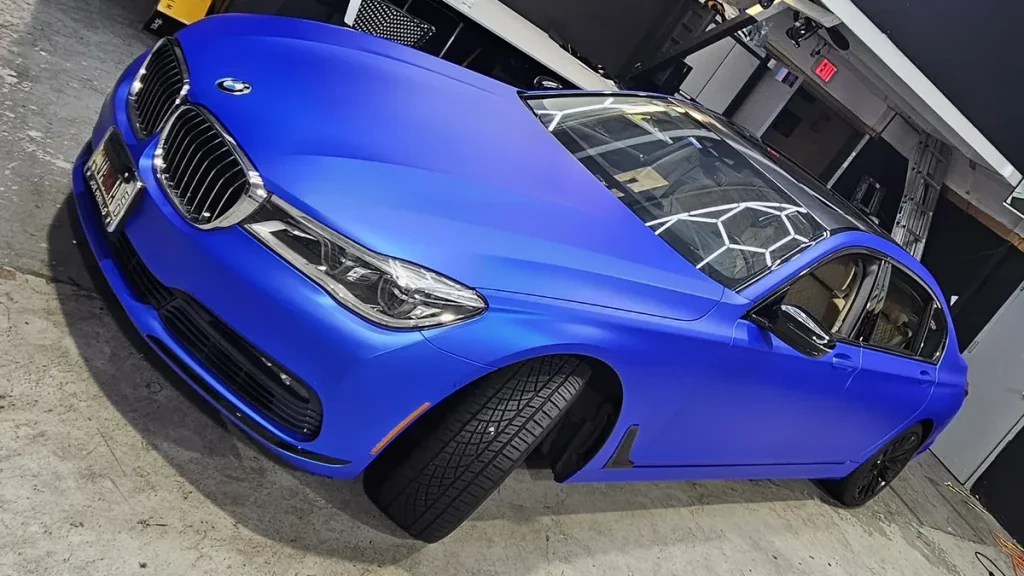

Window tint does more than darken the glass. The film you choose decides how much heat stays out of the cabin, how clear the view is and how the tint looks years from now. Here’s a plain-English look at carbon vs. ceramic window film — the two materials we install most — plus our top-tier option.
Key takeaways
- Carbon film gives a matte, factory-style look and cuts heat and glare well — a big step up from basic dyed tint.
- Ceramic film rejects more heat while keeping visibility crystal-clear.
- Ultimate ceramic (Evolve) is our top tier for maximum comfort.
- Shade is chosen with you at the shop — not from a chart online.
How carbon window film works
Carbon film uses carbon particles in the film layers to absorb and block heat. It has a non-reflective, matte-black look that suits almost any car, and it won’t fade to purple the way cheap dyed films can.
- Non-reflective, factory-style finish
- Cuts heat and glare noticeably
- Adds privacy and protects interiors from UV
How ceramic window film works
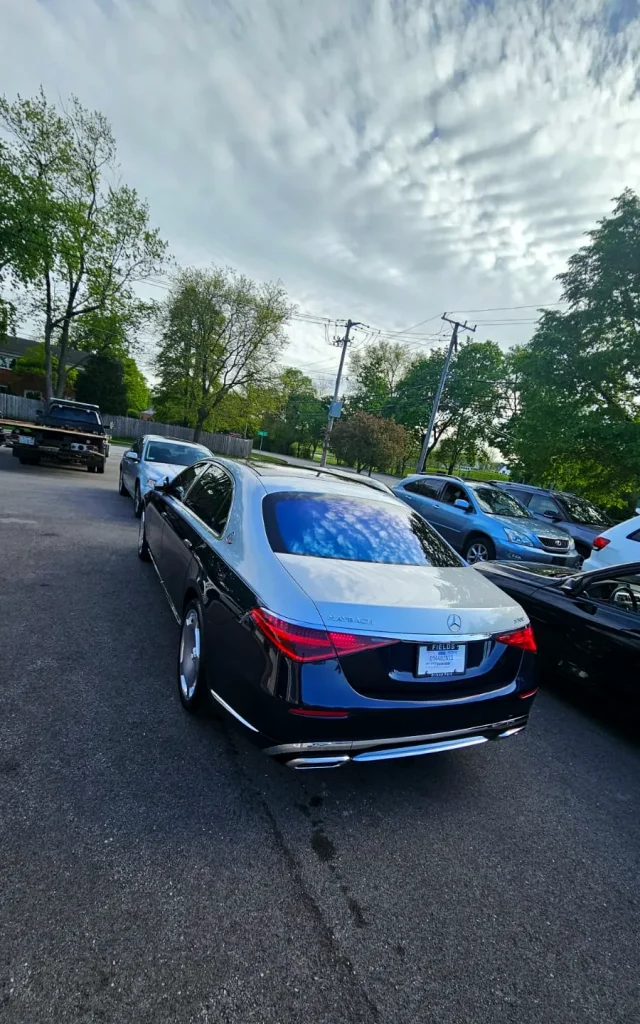
Ceramic film uses non-conductive ceramic particles that are especially good at blocking the infrared heat you feel through the glass. The result is a cooler cabin and excellent clarity — and because it’s non-metal, it won’t interfere with phone, GPS or radio signals.
Side by side
| Carbon film | Ceramic film | |
|---|---|---|
| Look | Matte, factory-style | Clear and crisp |
| Heat rejection | Good | Stronger |
| Clarity | Very good | Excellent |
| Signal-friendly | Yes | Yes — non-metal |
| Best for | A clean look and everyday comfort | Maximum comfort in summer sun |
Where ultimate ceramic fits in
Our top-tier film, ultimate ceramic (Evolve), is for drivers who want the most comfort and protection their windows can offer — especially on cars with large glass areas or panoramic roofs. Ask about it when you request a quote.
What about the shade?
We don’t publish shades online because the right choice depends on your vehicle, your glass and how you use the car. We’ll walk you through samples at the shop so you can see them on real glass before you decide.
So which should you choose?
- Choose carbon if you want a sharp look, better comfort and good value.
- Choose ceramic if heat is your main complaint or you spend long hours driving.
- Choose ultimate ceramic for the best performance we offer.
Is ceramic window film worth it for Chicago drivers?
Chicago-area driving means hot, bright summers and long commutes with the sun low on the horizon. That is where ceramic window film earns its place: it is designed to cut heat and glare without relying on a darker look.
- Comfort: ceramic window film helps keep the cabin cooler on summer days, so the air conditioning works less hard.
- Clarity: it is built to stay clear and stable, without the haze some older films develop.
- Electronics: ceramic film does not use metal, so it will not interfere with phone, GPS or radio signals.
- Interior protection: quality films block most UV, which helps protect leather, dash plastics and trim from fading.
Carbon film is still a great choice if you mainly want privacy and a clean, matte look on a budget-friendly install. The difference is mostly in how much heat each film rejects and how it performs over time.
If you want to read more about how automotive films are tested and rated, the International Window Film Association has helpful consumer information. Then bring your car in — we will show you real samples of carbon, ceramic window film and ultimate ceramic side by side, and explain which one fits how you drive.
See all three films on our window tinting page, or ask about commercial window tinting for your office or storefront.