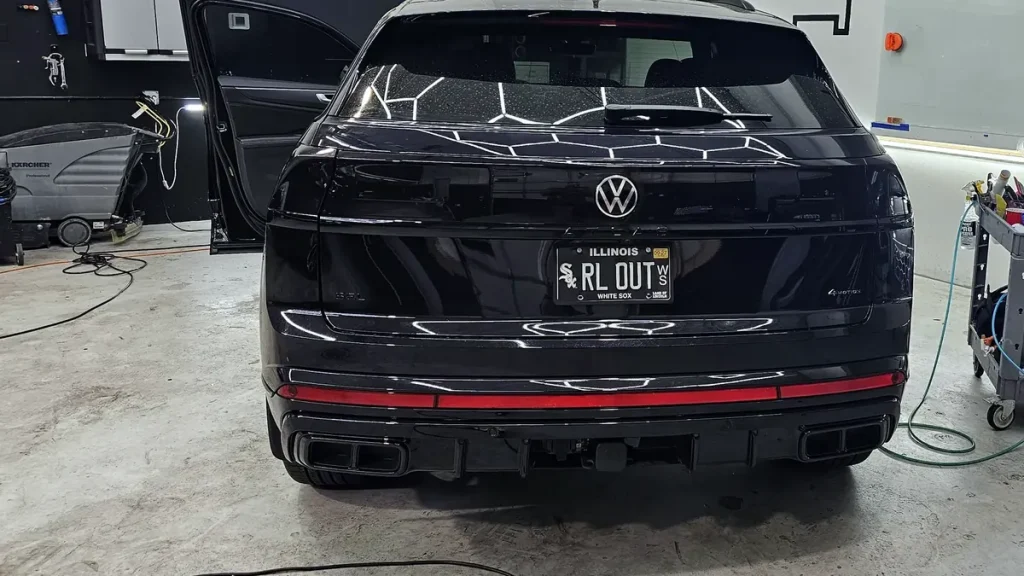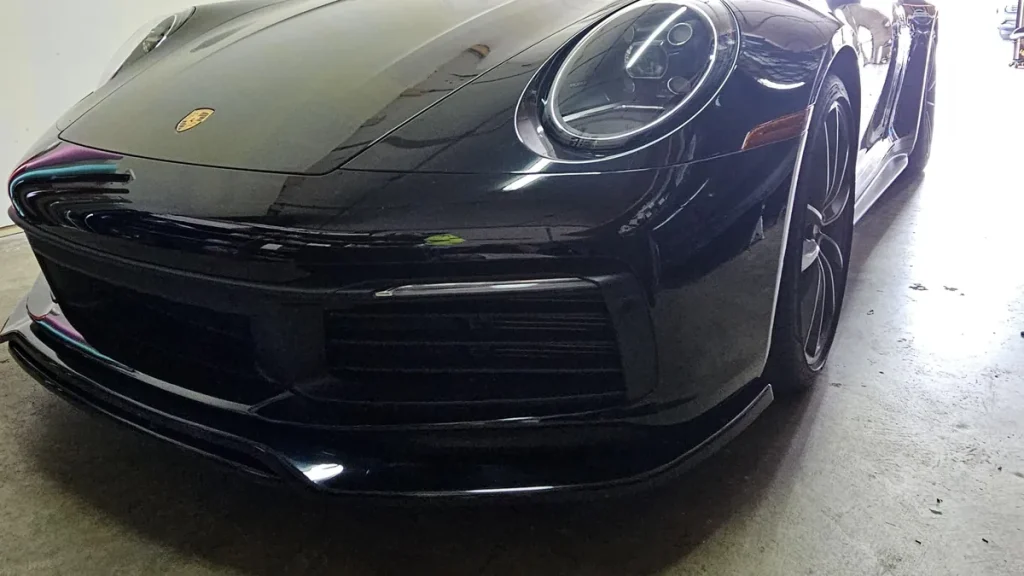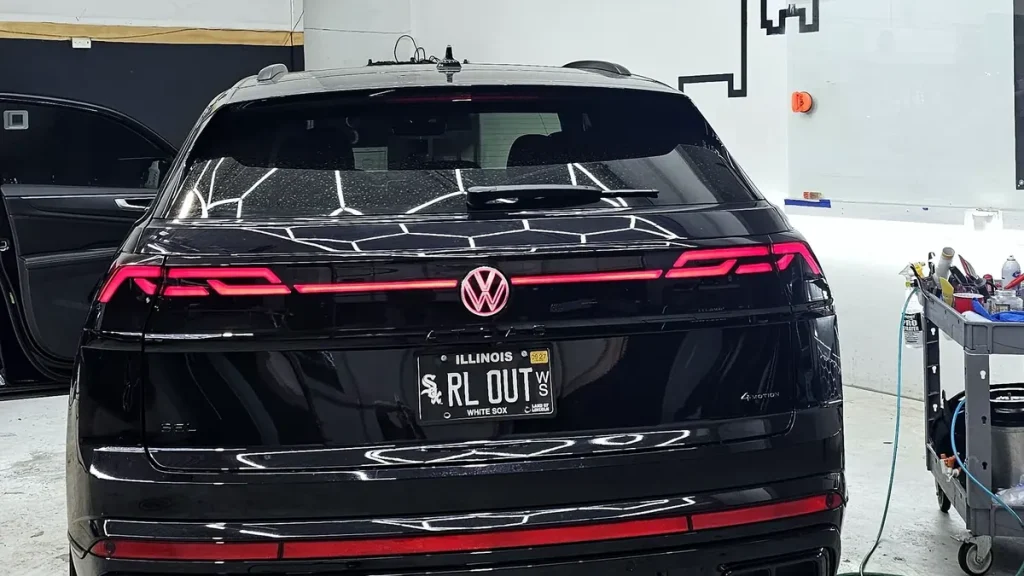

If you’ve just picked up a new car — or finally had the rock chips on your current one fixed — you’ve probably heard both terms. PPF vs. ceramic coating is one of the most common questions we get: paint protection film (PPF) and ceramic coating both “protect paint,” but they do very different jobs. Here’s how they compare, and how we help drivers in La Grange and Chicago’s western suburbs decide.
Key takeaways
- PPF is a clear physical film that takes rock chips, scratches and scuffs so your paint doesn’t.
- Ceramic coating is a hard, glossy layer that repels water and grime and makes washing easier — but it won’t stop rock chips.
- Many drivers combine them: film on high-impact areas, coating over the whole car.
What paint protection film does
PPF is a clear, flexible urethane film applied to painted surfaces. It takes the hit instead of your clear coat — gravel on the expressway, door dings in tight lots, shopping-cart scuffs. Many modern films have a self-healing top layer, so light swirls fade with warmth from the sun or warm water.
Coverage can range from the high-impact areas — front bumper, hood, fenders and mirrors — to the full body. Because it’s a physical layer, PPF is the only one of the two that truly stands up to rock chips. See our paint protection film service for the coverage options we install.
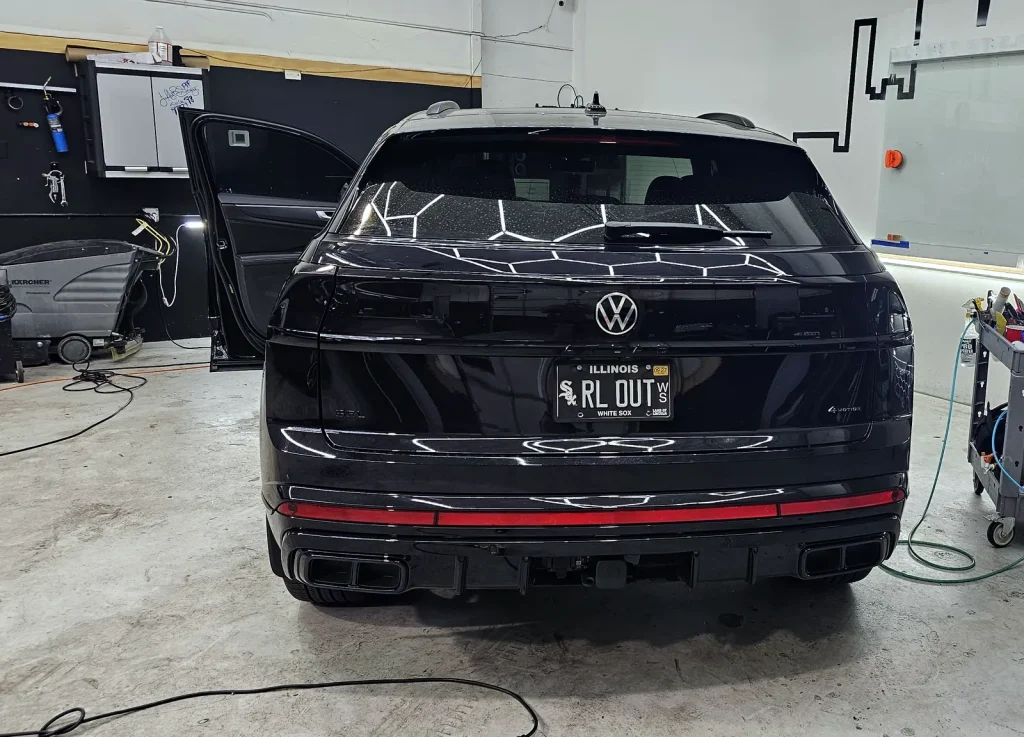
What ceramic coating does
A ceramic coating is a liquid that’s applied by hand and cures into a thin, hard layer bonded to your paint — or to PPF. It adds depth and gloss, makes water bead and sheet away, and helps keep road film, bird droppings and bugs from bonding to the surface, so washing is faster and easier.
It also adds UV protection that helps resist fading. What it can’t do is absorb an impact: a coating is far too thin to stop a rock chip.
PPF vs ceramic coating: side by side
| Paint protection film | Ceramic coating | |
|---|---|---|
| Rock chips & scratches | Absorbs impacts; light swirls self-heal | Minimal — too thin to stop impacts |
| Gloss & depth | Near-invisible; gloss or matte film | Adds noticeable gloss and depth |
| Water & dirt | Smooth surface that cleans easily | Strongly water-repellent; grime releases easily |
| UV & stains | Shields the paint underneath | Helps resist fading and etching |
| Coverage | High-impact areas or full body | Paint, wheels, glass and trim |
| Best for | Daily highway miles, new and performance cars | Easy upkeep and a deep shine |
“Our usual advice: film where the car takes hits, coating everywhere for easy care.”
The MLUX team
When to choose PPF, coating — or both
- Choose PPF if you drive the expressway daily, your car is new or freshly corrected, or you want to keep the factory paint chip-free for resale.
- Choose ceramic coating if you mostly want gloss, easier washing and protection from the elements.
- Choose both for the best of each — film on the high-impact areas, then a coating over the film and the rest of the paint.
Caring for protected paint
- Hand-wash with a pH-neutral soap and the two-bucket method.
- Keep pressure-washer tips well back from film edges.
- Rinse off road salt and brine regularly through winter.
- Skip abrasive polishes and automatic brush washes.
More on washing habits in our guide to ceramic coating care.
PPF vs ceramic coating: questions to ask before you decide
When drivers compare PPF vs ceramic coating, the right answer usually comes from a few honest questions about how the car is used rather than from the products themselves.
- How many highway miles do you drive? Daily expressway driving means more gravel and more chips, which points toward film on the front end.
- Is the paint new or recently corrected? Protection works best over paint that is already in great shape, so timing matters.
- How do you wash the car? If you want washing to be faster and easier, a coating makes a noticeable difference — on paint or on top of film.
- Do you want to change the look? Gloss film keeps the factory shine; matte film can give gloss paint a satin look. A coating adds depth and slickness.
- How long will you keep the car? Long-term owners and drivers who care about resale often protect the front end with film first.
Both products are only as good as the installation. Film has to be trimmed and wrapped cleanly around edges, and a coating needs properly prepared paint to bond. We source film through trusted suppliers like Metro Restyling and walk you through the options in person, so the PPF vs ceramic coating decision is based on your car and your routine — not a sales pitch.
If you are still unsure, start with the areas that take the most abuse. Many owners protect the bumper, hood and mirrors with film first and add a ceramic coating later — the two work well together.
Frequently asked questions
Can ceramic coating go on top of PPF?
Yes. Coating the film adds gloss and makes it easier to clean. We’ll recommend a coating that’s compatible with the film on your car.
Will I be able to see the film on my car?
A quality film, installed well, is very hard to spot. Choose a gloss film to keep the factory shine, or a matte film to give gloss paint a satin look.
Is there anything to do after installation?
Film and coatings need time to cure before the first wash. We’ll walk you through the timing and care steps when you pick up your car.
Still deciding? Tell us how you drive and what you want to protect, and we’ll recommend the right mix for your car — or read more about detailing and ceramic coating at MLUX.