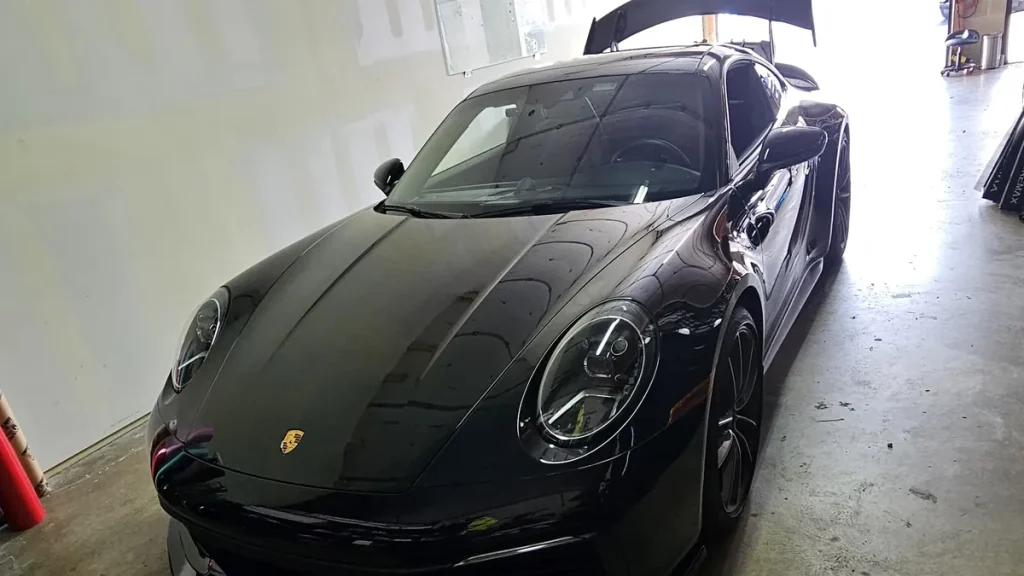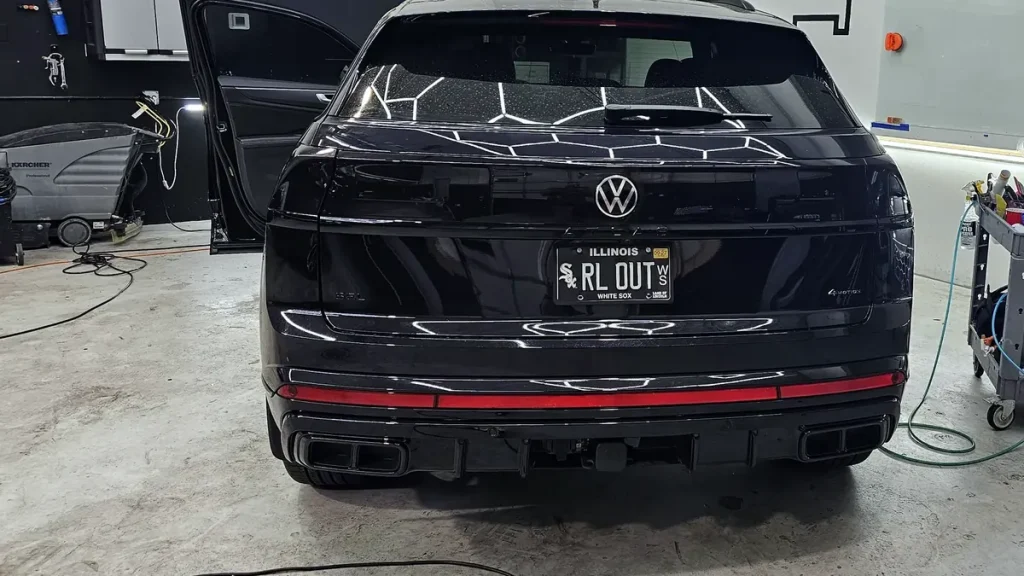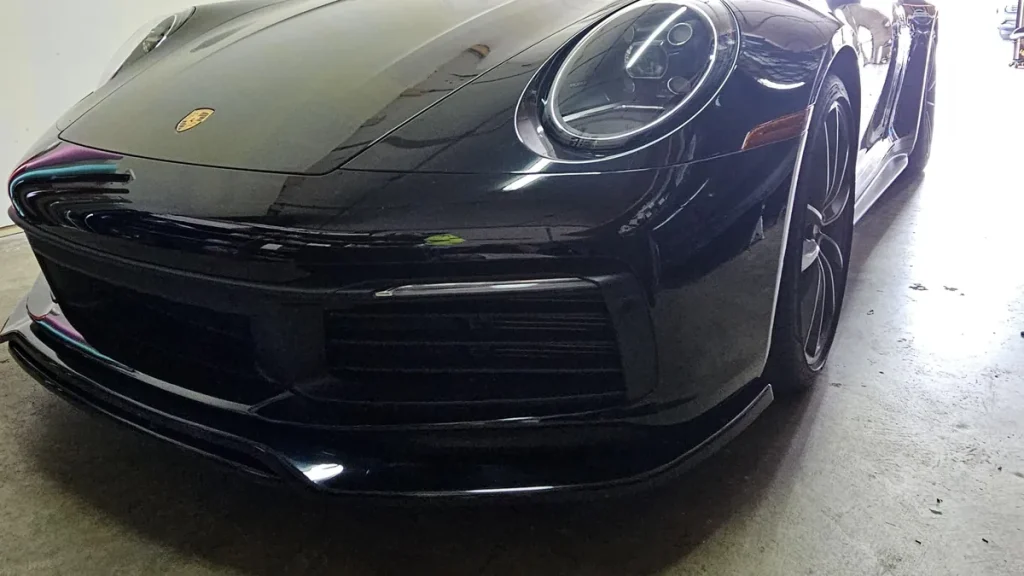

Paint protection film can cover a few key panels or the whole car. Should you choose front-end coverage or full-body PPF? The right PPF coverage depends on where damage happens, how long you plan to keep the car and how you drive it every day.
Key takeaways
- Most rock chips hit the front bumper, hood, fenders and mirrors.
- Front-end coverage protects those areas and is the most popular choice.
- Full-body coverage protects every painted panel — ideal for new, high-value or color-sensitive cars.
Where rock chips land
On the highway, debris is thrown up by the cars ahead and hits the leading edges of your vehicle first: the bumper, hood leading edge, headlights, fenders and mirror caps. Rocker panels and the area behind the wheels take spray from your own tires.
Front-end (partial) coverage
- Front bumper and headlights
- Hood and front fenders
- Mirror caps
- Optional: rocker panels and door edges
This is the best balance for most daily drivers.
Full-body PPF coverage
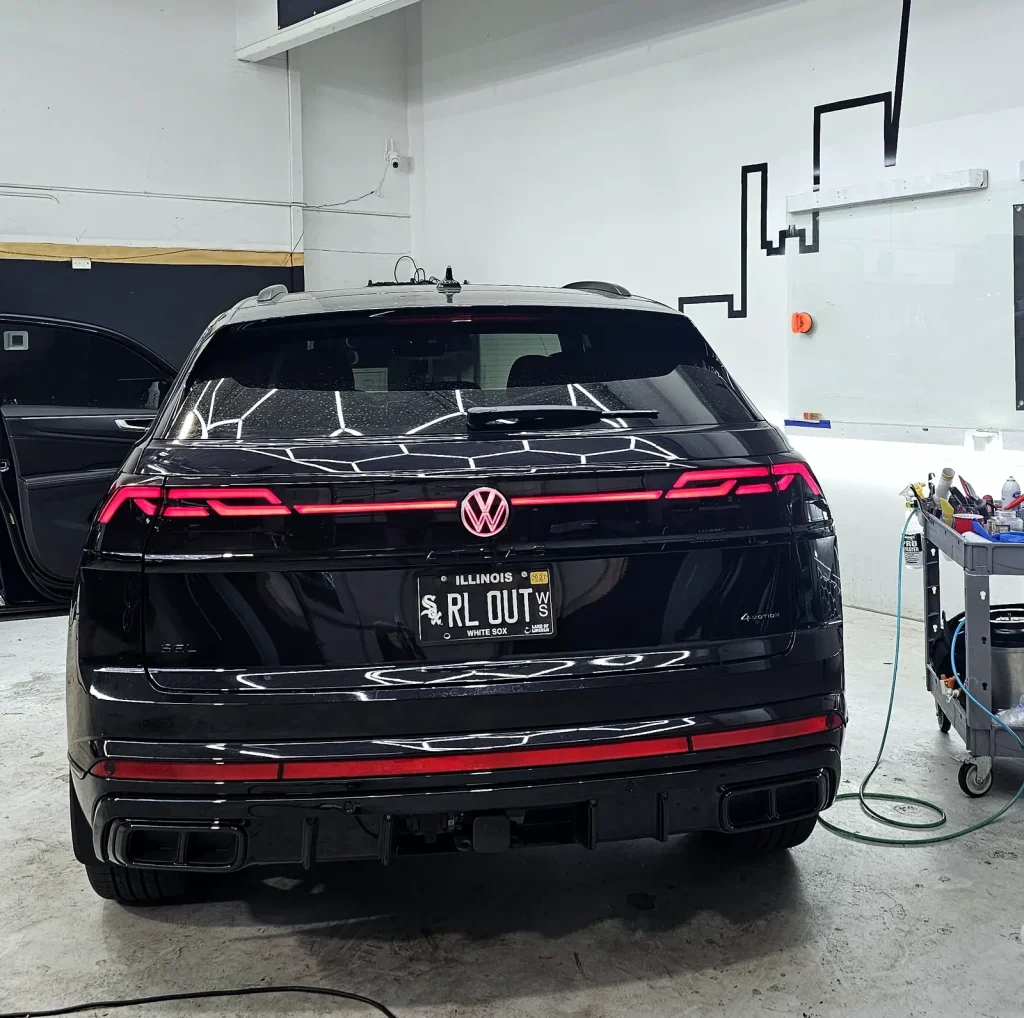
Full-body film covers every painted panel, edge to edge. It’s the choice for new cars you want to keep perfect, special paint colors that are hard to match, and cars that may later wear a different finish — a matte film can give gloss paint a satin look all over.
Matching coverage to how you drive
| If you… | Consider |
|---|---|
| Commute on the expressway daily | Front-end plus rockers |
| Have a new or high-value car | Full body |
| Mostly drive around town | Front-end |
| Want a matte look on gloss paint | Full body in matte film |
When full-body PPF makes sense
Front-end coverage protects the areas that take most of the chips, but full-body PPF is the better choice in a few situations.
- You want the whole car protected: doors, rockers and rear quarters still pick up scratches, door dings and road debris.
- The paint is special: rare colors and exotic finishes can be hard to match if a panel ever needs repainting.
- You plan to keep the car long term: full-body PPF keeps the original paint in great condition for years.
- You want to change the look: matte film over gloss paint gives a satin finish across the whole car.
- You drive a lot of highway miles: more miles means more debris along the sides and rear, too.
Full-body PPF also makes the whole car easier to care for. The smooth film surface releases dirt more easily, and adding a ceramic coating on top makes washing even faster.
Front-end coverage remains a smart, practical option — especially for daily drivers that mostly see stone chips on the bumper, hood and mirrors. We are happy to show you both approaches on similar vehicles in the shop. We source film through Metro Restyling and trim every piece by hand.
Whichever you choose, the goal is the same: keep the factory paint looking new. Ask us to walk around your car and point out where full-body PPF or partial coverage would make the biggest difference.
Budget, timing and how long you plan to keep the car all play a part. Many owners start with front-end coverage and add more panels later, while others protect the entire car from day one. Either way, film installed by hand and trimmed carefully around edges will look cleaner and last longer than a rushed install.
If you are still undecided, start with how the car will be used over the next few years. A daily highway commuter collects far more chips on the bumper and hood than a weekend car, while a new or freshly painted vehicle you plan to keep long term often justifies full-body PPF from day one. Coverage can also be added later, so front-end protection today does not rule out more panels in the future.
Interior PPF is also an option for screens and piano-black trim. See all options on our paint protection film page, or read why earlier is better for paint protection.