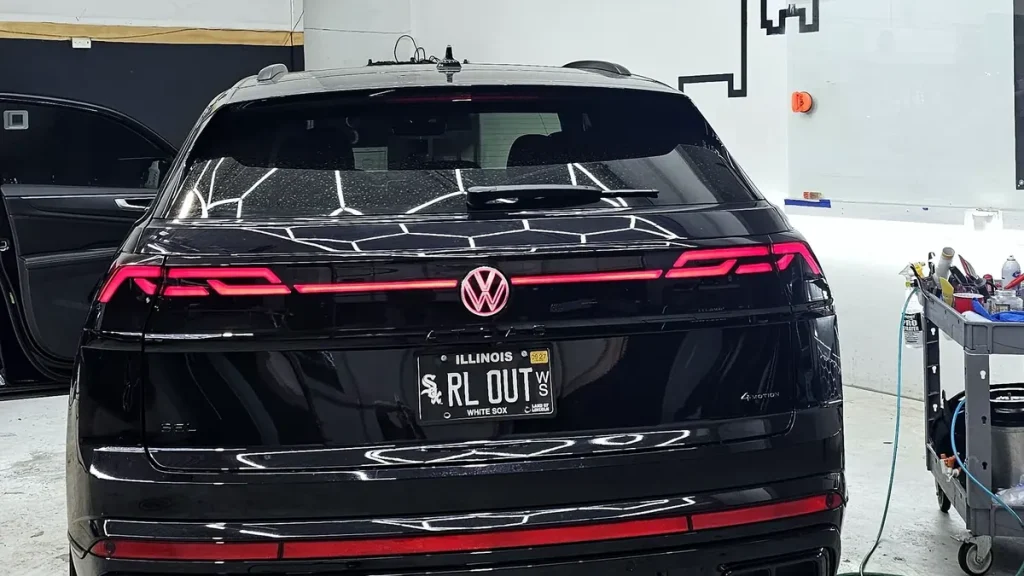

Between rock salt, liquid brine and gritty slush, a Chicago-area winter is one of the toughest environments for automotive paint. Good winter paint protection starts before the first snow — here’s where damage begins and how to stay ahead of it.
Key takeaways
- Salt and brine stick to lower panels and speed up corrosion at chips and scratches.
- PPF on the front end and lower panels blocks the chips that let salt in.
- A ceramic coating makes it much easier to rinse salt off.
- Rinse regularly through the season — especially the lower body and wheel wells.
Where winter damage starts — and why winter paint protection matters
Salt itself doesn’t eat through good paint overnight. The trouble starts at rock chips and scratches that expose metal, where moisture and salt can get to work. Lower doors, rocker panels, rear bumpers and wheel arches take the brunt of it.
What paint protection film does in winter
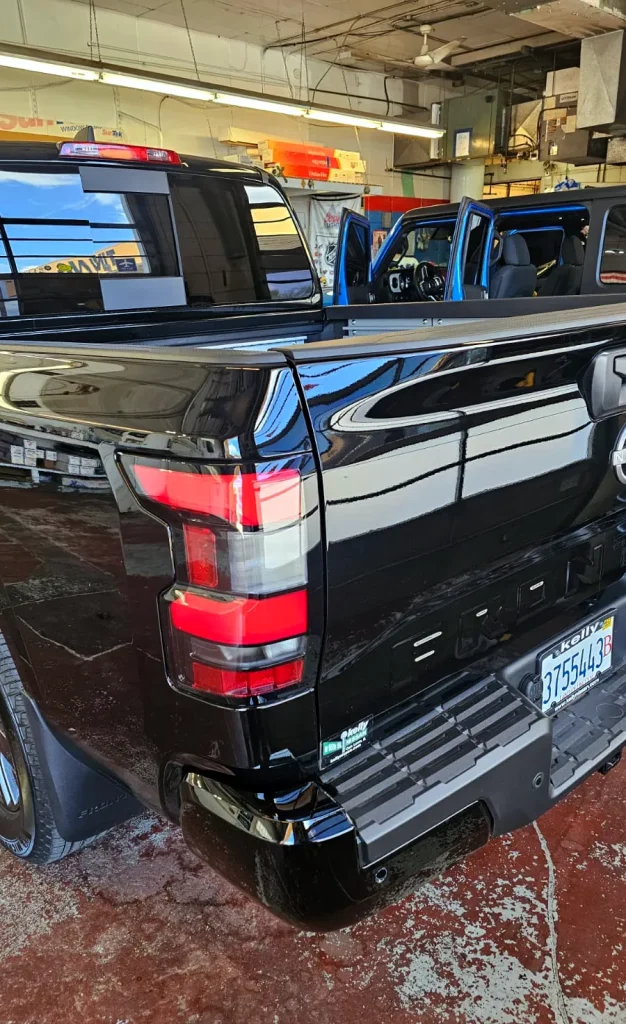
Clear film absorbs impacts from sand and gravel thrown up by plows and traffic, so fewer chips ever reach the paint. Adding film to the lower doors and rocker panels — not just the front end — is a smart move for drivers who rack up winter miles. See paint protection film coverage options.
What a ceramic coating adds
A coating won’t stop chips, but its slick surface makes salt, slush and road film much easier to rinse away — so contaminants spend less time on the paint. Read our comparison of PPF vs. ceramic coating for more.
A washing routine for salt season
- Rinse the car whenever temperatures allow, focusing on lower panels and wheel wells.
- Use a touchless wash or hand wash — skip brushes that grind grit into the finish.
- Dry door jambs and seals to stop them freezing.
- Check for new chips each month and get them looked at early.
Prep before the first snow
- Book protection work in early fall so film and coatings can cure before salt season.
- Fix existing chips before they spread.
- Ask us to inspect the underbody and brakes during a free multi-point inspection.
A simple winter paint protection checklist
You do not need a complicated routine to get through salt season. This winter paint protection checklist covers the basics most drivers in La Grange and the western suburbs need.
- Before the first snow: wash and decontaminate the paint, then protect it — film on high-impact areas, a coating or a quality sealant everywhere else.
- During salt season: rinse the car, wheels and underbody regularly, especially after storms when roads are heavily treated.
- Choose touchless or hand washes: brush washes can drag salt and grit across the paint.
- Clear snow gently: use a soft brush rather than scraping across painted panels.
- Check for chips: small chips let moisture and salt reach the metal, so have them addressed before spring.
Safe winter driving matters as much as clean paint, and the NHTSA winter driving tips are a good reminder before the season starts. When the roads are clear again, a spring wash and inspection shows how well your winter paint protection held up and whether anything needs attention.
Ask us about film for the front end and a ceramic coating for the rest of the car — together they make the next salt season much easier on your paint.
If your car already has chips, have them touched up or repaired before winter so salt cannot creep under the paint.
Want a recommendation for your car? Call the shop or request a quote and tell us how you drive in winter.